Ad technology insights turned inside out.

Thursday, March 24, 2011

“Pixel-less” integrations are the unicorn of data management


In a marketplace where data management companies add new features to the pitch every day, it can be difficult, even confusing, for a publisher to keep track of the new bells and whistles in the DMP space.

Understanding that this marketplace is already tough to navigate, I find this new messaging I’m hearing confusing. I’m referring to a magic trick called “pixel-less” or “pixel-free” data management. I’ll be blunt here — full-blown, pixel-free data management is not possible. When you hear this from a data company, ask them, “What’s the first step after signing up?” The answer will be that they need to pixel your site.

Why is pixel-less data management not possible?

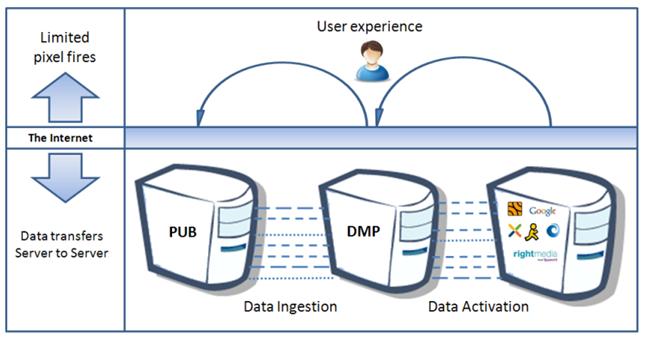
For data to transfer from one domain (the publisher’s) to another domain (the advertiser’s server or media outlet), it needs a pixel for the receiving server to identify the user. Even with server-to-server data transfer on a user’s profile information, there still needs to be at least one pixel fired from the receiving server to identify the user and drop a cookie. There needs to be at least one pixel per transfer.

Unless the publisher’s site, their data management platform and ALL of the media is served under the same domain, pixel free data management is impossible. This is actually a good thing, as it creates real scarcity in the data market. If pixels weren’t needed, then data inventory would never have a bottom. Publishers limit the amount of pixels fired on their site like they do ad space, and we currently have a real bottom to the market.

But why are data companies saying this?

Every data company is integrating “server-to-server” data transfer with DSPs, SSPs and other media outlets to reduce the number of pixels being fired, but they cannot eliminate it completely to honestly call it “pixel-less.” Reducing number of pixels fired is accomplished by transferring user profile data from the data company into the media outlet’s server. However, the receiving media outlet must be able to drop a cookie on those specific users in order to know who they are. This is done by firing a pixel. Something needs to be served at some point. Even content or a banner serves a pixel that can be used to transfer data.

When would pixel free be a reality?

If Google was a total monopoly, it could possibly tie in Google Analytics tags to fire the script for keyword targeting into DART ad tags. But it’s not a monopoly. What if a DART publisher is selling ad space into Yahoo’s network or a DSP? The data won’t be there for an advertiser to target unless it is moved there via a pixel fire at some point.

Another way it would be possible is by matching the user through personally identifiable information. So if a data management company says they are doing pixel free integration, ask them if this is how they are matching the data to the user.


Monday, June 7, 2010

Why A Microsft Acquisition of AOL May Make Sense This Time Around

Around two years ago during the reported talks of a Microsoft + Yahoo marriage, another relationship came to surface: that of Microsoft acquiring AOL. Well, history repeats itself, as the acquisition chatter is aflutter again over the same MAOL opportunity.

On the surface, everyone can see a purchase of AOL comes with a boost in search share and a tremendous lift in impressions, both of which would likely put any suitor to the top of the comScore property list. But underneath, there is more that AOL can provide that goes unnoticed. Yahoo sees this additional value through their recent purchase of Associated Content.

Currently, the largest value in content generation lies within natural search result monetization. It is clear from this observer that ownership of the natural search monetization channel is the value that Tim Armstrong sees and is building at AOL. Associated Content (remember, also backed by Armstrong) was probably pitched to Yahoo in the same way that AOL is rumored to being pitched to Microsoft. AOL’s Seed.com will only generate content that will show up on search results that command high CPC bids. Content on mesothelioma, auto insurance, student loan consolidation and other top CPC driving search terms will be created on-demand, not just more manicured thought pieces on politics, news and entertainment (for more in this “impatience media” movement, read the following in yesterday’s New York Times).

Tim can see that Google only owned a small portion of the revenue that was generated from a search, while thousands of other companies made billions from Google’s free results. Vantage Media is but one company that reaped the benefits of this with content generation made specifically for boosting their ad portals into natural search results. They built an entire business model around one keyword pair: online education. Why not expand this model into every vertical? And who better to crack this than a former Googler that knows the natural search results game?

In fact, you’d think that Google would be after AOL as well considering they already own a stake and it’s already being run in the direction they want it to go by their own people. It’s a no brainer, and it seems to give off an eerie scent of an inside job (in as much as Google acquiring Publicis might be considered an inside job too!). The only thing that would throw a wrench in a Google purchase under this premise is the idea that Google would become the fox guarding the “relevant results” henhouse. But what’s the difference? It’s already happening now, Google just doesn’t own it yet.

The value in owning the impressions off of natural search results only increases when true liquid access to advertising on this content combines with real time bidding, exchanges and DSPs; add to this the tremendous behavioral targeting data opportunities with retargeting, and Microsoft or Google can squeeze a lot of blood from this stone. As such, the benefits likely outweigh the monetary cost of what AOL may command, but any buyer must also know the indirect costs (re: some of AOL’s well-publicized problems) and how to handle them. A buyer must know exactly what to do with each portion of AOL before they buy it so that we don’t see history repeat itself yet again with another failed AOL ‘synergy’ merger.